Indonesia Must Respond to the Global War over Rare Earth Raw Materials
The Indonesian nation was never born out of the logic of fear, but out of moral courage—courage to uphold human dignity and to shape a shared future. Pancasila mandates that humanity, political sovereignty, social justice, and collective prosperity must move in harmony—including in the governance of natural resources bestowed by God.
In an era when strategic minerals have become the lifeblood of civilization, these values have not lost relevance—indeed, they increasingly determine the direction of geopolitical and economic policy. In parallel, Asta Cita as the nation’s long-term development strategy affirms Indonesia’s historical mission: building economic self-reliance, value-added industrialization, technological leaps, and resilient national defense.
None of this can be realized if Indonesia remains dependent on other countries for access to critical minerals—especially rare earth metals—that underpin digital civilization, renewable energy, and modern defense systems. In a globalization that appears borderless, it is precisely supply chains that prove power always has a center of gravity. As U.S.–China rivalry enters a phase of technological warfare, rare earth metals and the refining of Rare Earth Elements (REE) have become a quieter yet far more decisive arena of contestation.
Fighter jet industries, warships, satellites, and radar systems—all require rare earths. From the standpoint of national values, the race for rare earths is not merely a market issue; it is a test of national dignity. Sovereignty is not only about protecting borders, but also about controlling strategic resources that determine the trajectory of the future. If Indonesia fails to manage critical minerals sovereignly, Asta Cita will remain a slogan; conversely, if mineral wealth becomes the foundation of national industrialization, this great nation can enter a new chapter as a global technology hub.
Global realities show that the world is no longer controlled by the thunder of warships or the blast of weapons, but by silent decisions that shake industrial supply chains. In April 2025, when China tightened rare earth export controls, the world was jolted to see how geopolitical power operates without sound. Within weeks, Ford was forced to halt part of its production in Chicago, the European Union warned of potential factory shutdowns in early June, and the price of permanent magnets—core components for electric vehicles and military radar—soared.
Minerals have become a new language of power. The world is entering an age in which dominance is built not through military alliances, but through control over raw materials that animate digital devices, green energy, and defense systems. In response, major powers are accelerating the construction of what they call “mineral fortresses.” The United States and Australia are strengthening supply consortia; the European Union is fast-tracking refining facilities in Estonia and France; India is restricting exports for domestic industrial development while positioning itself as an alternative supplier for the Indo-Pacific.
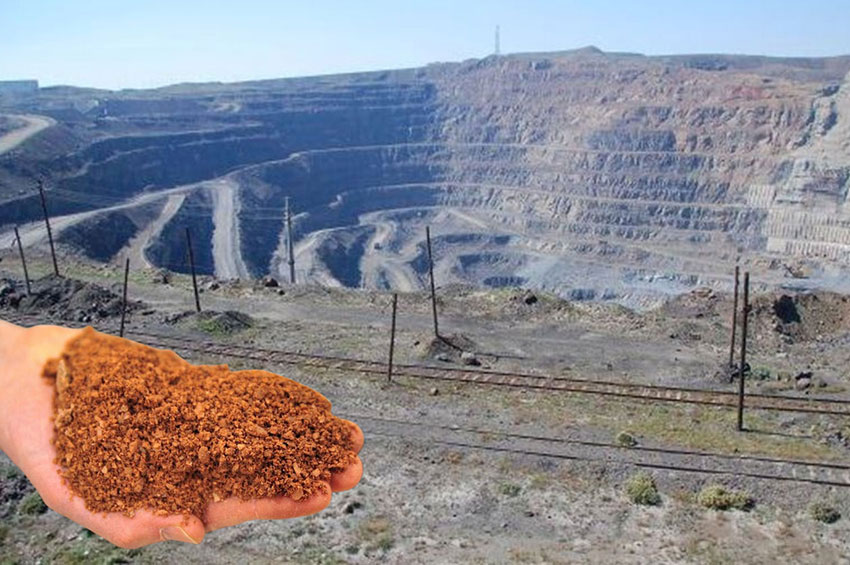
Amid that global turbulence, the most crucial question confronts us: “Where does Indonesia stand?” Indonesia is not merely a spectator. With REE reserves in Bangka Belitung, bauxite potential in Kalimantan, and nickel in Sulawesi, Indonesia holds a combination of elements most sought after for renewable energy industries and modern defense. Yet this potential has not become strategic power. Rare earths are still often discussed as discourse, rather than formulated as a national development priority.
Pancasila teaches social justice and political sovereignty: natural wealth must elevate the dignity of the people, strengthen self-reliance, and advance knowledge and science. Asta Cita demands that Indonesia move up the value chain—from a raw-material exporter into a center of technology and defense. Therefore, the paradigm of mineral development—“how much do we mine”—must be replaced by: “how much technological value can we create?”
Indonesia needs a national governance framework that integrates rare earth refining, materials research, permanent magnet industries, defense electronics, batteries, supercomputers, and renewable energy technologies. Minerals must not be allowed to flow outward as raw materials, but converted into a civilizational leap.
From a geopolitical perspective, the next strategic question is: how should Indonesia position itself amid great-power competition? The answer is not choosing a bloc, but structuring partnerships. Japan, South Korea, India, the European Union, and Gulf countries can become partners in R&D and downstream industrialization without sacrificing economic relations with China. Indonesia’s free and active foreign policy provides moral legitimacy to advocate for peaceful, transparent, and sustainable governance of critical minerals.
REEs need not become sparks of conflict; they can become instruments of economic diplomacy and Indo-Pacific stability. Rare earth industrialization must not repeat the tragedy of the resource curse—wealth that impoverishes local communities, produces inequality, and destroys ecology.
The gains from critical minerals must flow into technology scholarships, improved regional education, materials research centers, high-skilled job creation, and intergenerational economic distribution. Mining managed with the values of Pancasila should not merely generate revenue, but build human dignity.
At this point, history awaits Indonesia’s choice. Will we merely become the world’s market, or owners of the future? Will we fall again into the old pattern—exporting our land and importing our future—or take a leap as a producer of technology? History offers warnings, but also opportunities. If we remain silent, the future will be determined by other nations. But if we build a critical minerals ecosystem with political courage, civilizational vision, and investment in science, Indonesia will become not only a mineral supplier, but a global center of technology and industrial power.
The world is writing a new chapter in the struggle for raw materials that shape civilization. Indonesia must not merely read the pages of history. Indonesia must write them—with Pancasila as the foundation, Asta Cita as the development compass, knowledge as the weapon of civilization, and the resolve that the people’s welfare is the highest purpose of sovereignty.
Prof. Dr. Ermaya Suradinata, SH, MH, MS
Former Director General of Socio-Political Affairs, Ministry of Home Affairs of the Republic of Indonesia (1999–2001)
Former Governor of the National Resilience Institute (LEMHANNAS RI) (2001–2005)
 English
  Indonesian