Strengthening the Governance of Papua’s Special Autonomy for Inclusive and Equitable Development
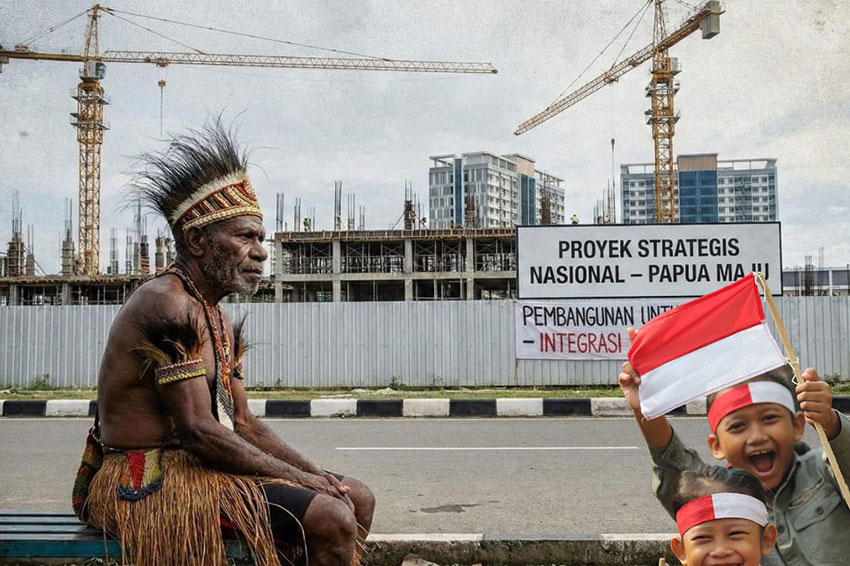
Papua’s Special Autonomy represents a hope far greater than mere administrative engineering; it carries a moral promise that the state is capable of delivering justice, recognition, and equal living space for Indigenous communities that have borne the burden of inequality for decades. Based on Law No. 21 of 2001 on Special Autonomy for the Province of Papua, later amended by Law No. 2 of 2021, strengthening governance is an absolute prerequisite to ensure that the spirit of Special Autonomy does not remain a slogan, but materializes into tangible change felt in Papua’s villages, valleys, and coastal areas.
Budget transparency, enhanced bureaucratic capacity, and participatory oversight must ensure that every rupiah of Special Autonomy Funds is properly targeted—reaching education, healthcare, basic infrastructure, and local economic empowerment. Amid geographic challenges and cultural diversity, effective governance demands adaptive approaches aligned with customary social structures that long predate the modern state.
Inclusive and equitable development, therefore, cannot rely solely on strengthening formal institutions; it requires more substantive political representation for Indigenous Papuans, as guaranteed in provisions concerning political special status and customary representation mechanisms in the DPR and MPR. The success of Special Autonomy is determined by the extent to which Papuan communities become the primary actors in shaping their own development trajectory.
Within the framework of Pancasila and Asta Cita, Papua’s Special Autonomy is not merely a decentralization arrangement, but a manifestation of the state’s commitment to social justice, respect for human dignity, and equitable development. The Special Autonomy Law serves as a constitutional instrument to ensure recognition of Indigenous rights and to encourage their political participation as subjects—not objects—of development.
Papua, with its cosmology and cultural diversity, challenges the state to prove that the principle of just and civilized humanity truly lives in practice, not only in legal texts. This is where Special Autonomy is tested: whether it can generate dignified governance within the spirit of Bhinneka Tunggal Ika and the ideal of an inclusive Indonesia.
Two decades of Special Autonomy have produced notable progress—new schools, more evenly distributed healthcare services, gradually improving connectivity, and increased capacity among some local officials. Nevertheless, political representation remains an indispensable element. Its effectiveness is measured not merely by the number of seats in regional and national legislatures, but by the quality of local actors in advocating public interests, strengthening oversight, directing development in line with cultural contexts, and negotiating Papua’s interests within the national arena.
In the context of structural change, the creation of new provinces—South Papua, Central Papua, Highland Papua, and Southwest Papua—is often viewed as a state effort to shorten the distance of public service delivery and bring government closer to the people. In theory, regional division can expand representational space, create more local political seats, and open new opportunities for Indigenous communities to lead their own regions.
However, regional expansion carries a double-edged sword. On one hand, it offers hope for accelerated development; on the other, it risks institutional fragmentation, unprepared bureaucratic capacity, and the emergence of new political patronage that may obscure the original objectives of Special Autonomy. Regional expansion will only be meaningful if it broadens spaces for communities to articulate their voices freely, strengthens local institutions, and improves governance—rather than merely multiplying administrative structures.
Political representation in Papua is also closely linked to the recognition of Indigenous rights. Without substantive protection of land, culture, language, and customary legal mechanisms, representation risks becoming a political formality detached from its social roots. Law No. 2 of 2021 does open space for cultural institutions and mechanisms for protecting customary land, but law does not operate in isolation. It requires actors with social legitimacy, political capacity, and emotional proximity to their communities.
Therefore, strengthening the political capacity of Papuan youth, empowering Indigenous women, and reinforcing cultural leadership are essential elements in creating representation capable of driving transformation. The effectiveness of Special Autonomy is thus measured not only by fiscal indicators or development metrics, but also by the ability of both the state and Papuan society to build a shared imagination of the future.
Papua needs space to define itself within the broader map of Indonesian nationhood—not as a periphery, but as one of many centers forming the nation’s mosaic. From this perspective, political representation is not merely the task of leaders, but a collective practice of society to stand as an equal partner in building Indonesia. When voices from Wamena, Merauke, Nabire, Sorong, Fakfak, and Jayapura can be heard without navigating long and winding channels, Papua ceases to be merely an administrative territory and becomes an essential part of the nation’s living pulse.
Ultimately, Special Autonomy will find its deepest meaning only if it becomes a bridge connecting past and future, wounds and hopes, diversity and unity. It will succeed only when the dignity of the Papuan people is restored, when their voices shape the direction of development, and when their representation becomes a guiding light on the journey toward Indonesia Raya—an Indonesia that is great not because of the vastness of its territory, but because of the breadth of its heart in caring for all its citizens, without exception.
Prof. Dr. Ermaya Suradinata, SH, MH, MS
Former Director General of Socio-Political Affairs, Ministry of Home Affairs of the Republic of Indonesia (1999–2001)
Former Governor of the National Resilience Institute (LEMHANNAS RI) (2001–2005)
 English
  Indonesian