Geopolitics and the Free and Active Foreign Policy in a World Without Helpers
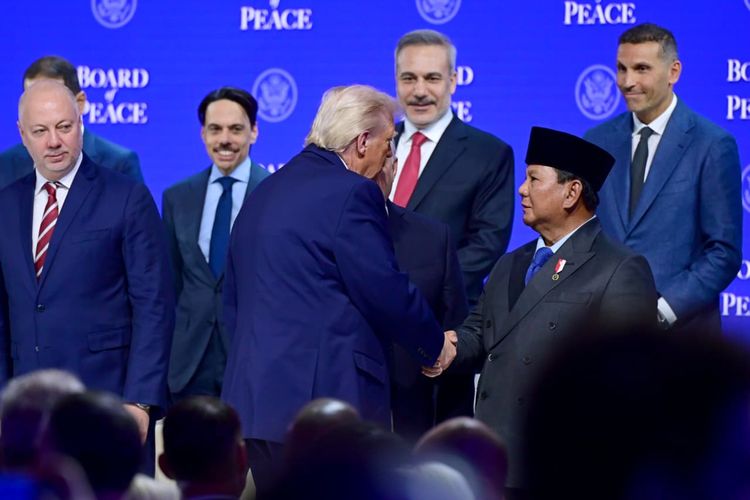
President Prabowo Subianto’s statement on the risks of pursuing a free and active foreign policy amid global geopolitical dynamics did not sound like mere rhetoric delivered in the pomp of a state address.
At the 2026 National Coordination Meeting of the Central and Regional Governments in Bogor, West Java, on Monday (February 2, 2026), the President stated:
“If we truly want to be non-aligned, if we truly want to not be involved in any pacts, if we truly want to be friends with everyone, then we are on our own. If we are threatened, if we are attacked, no one will help us, brothers and sisters. Believe me, nobody is going to help us,” said Prabowo.
These words emerged from a long contemplation in the silence of history, affirming a realistic awareness that national sovereignty ultimately rests on a nation’s own strength and preparedness.
Rather than spreading pessimism, the statement invites us to pause and look at the world with greater honesty. The world does not always move on empathy and solidarity, but on interests and calculations of power.
In a global order without a final guarantor, the safety of a nation often depends on its own capacity to endure.
Such honesty has long lived in Indonesia’s collective memory.
Bung Karno, the first president of this great nation, with all the romance of his revolutionary spirit, once reminded us that independence is not a risk-free safe space. A free and active foreign policy is not a silent path devoid of threats, but a conscious choice not to surrender the nation’s fate to any external power.
Thus, for Indonesia, free means daring to bear consequences, while active means being present in the world without losing one’s self.
In this sense, President Prabowo’s statement is best read as an echo of an old awareness knocking once again at the door of our time.
He is not sowing pessimism, but reminding us that the world has never promised fairness.
Hope of being helped becomes an illusion if it is not accompanied by readiness to protect oneself. Within this acknowledgment lies a form of geopolitical humility: that the nation must not be lulled by the romanticism of international relations without a foundation of real strength.
In a world once again fractured by major interests, the principle of non-alignment feels increasingly lonely—almost like a voice drowned out by the clamor of global rivalry.
Yet precisely there lies its value. Non-alignment is not about standing outside the world, but about keeping enough distance to avoid losing direction.
It demands inner resolve and political maturity, because choosing not to take sides means being prepared to walk without handholds, without promises of protection—other than faith in one’s own strength.
The True Meaning of a Free and Active Foreign Policy
For Indonesia, a free and active foreign policy was never intended as a retreat from the world. It was born from an awareness of the dignity of a newly independent nation—that true independence is only possible when decisions are made by one’s own will.
Free means not submitting to foreign dictates, while active means participating in global affairs without losing one’s voice.
In this sense, foreign policy is not merely a matter of statecraft, but a reflection of how this great nation sees itself.
That awareness found its momentum in Bandung in 1955. The Asian–African Conference was not merely a diplomatic event, but a meeting of souls of nations long silenced by history.
They came bearing colonial wounds, but also hope not to become instruments in the struggle of great powers.
From Bandung, the idea of non-alignment grew slowly—not as a protective shield, but as an effort to maintain distance from a world being torn apart.
From there, Bung Karno never indulged in illusions of security. He knew that choosing not to take sides meant accepting solitude.
For Bung Karno, non-alignment was not a comfort zone, but a quiet space demanding firmness. It required moral strength to resist temptation, political strength to withstand pressure, and material strength to avoid being ignored.
Without all of these, freedom would remain a beautiful but fragile word. It is at this point that President Prabowo’s statement today finds its resonance.
When he speaks of a world that does not always help, he seems to repeat an old warning in more direct language.
Today, as the world fractures again under great-power rivalry and open conflict, a free and active foreign policy is tested once more—not as doctrine, but as a cultural practice.
It demands maturity to accept that the world is not always friendly, and courage to remain present without being absorbed.
Within the firmness of that choice lies a deep hope that Indonesia can still walk through the storms of the age—without losing direction and without surrendering its dignity.
The Non-Aligned Movement in an Era of Polarization
The Non-Aligned Movement was born from a sharply divided world, when ideological lines were drawn clearly and rigidly. Today’s world, however, moves in far more complex ways.
Polarization is no longer black and white, but layered, fluid, and often overlapping.
Yet one thing has never changed: major powers continue to act according to their own interests, not moral appeals or historical memory.
In such a world, non-alignment is not a position free from pressure. On the contrary, it often stands at the most vulnerable point, where competing interests pull from all directions.
A state that chooses not to take sides must be ready to face persuasion, threats, and temptations simultaneously. It is required to maintain clarity of stance so as not to be swept away by shifting currents.
When President Prabowo states that in extreme situations there is no guarantee of help from anyone, he is reminding us of a reality that is often forgotten.
International assistance almost always comes with conditions and interests. This awareness also lived in Bung Karno’s thinking: that placing a nation’s fate in the hands of others is a form of concealed fragility.
Therefore, the Non-Aligned Movement should not be understood merely as a symbol of past solidarity. It must be reread as a space to reaffirm shared sovereignty—a place where states unwilling to submit build collective bargaining power.
Without tangible national strength, non-alignment will remain a noble moral stance, easily ignored.
Thus, non-alignment is a choice that demands maturity. It is not a safe path, nor a shortcut to protection.
It is a long road of responsibility, requiring readiness to stand alone while retaining the wisdom to remain connected.
In this choice, a nation is tested: whether it is truly prepared to bear the consequences of the freedom it has chosen.
The concept of berdikari—standing on one’s own feet—was born not from theory, but from long experiences of colonization and betrayal by unfulfilled promises.
For Bung Karno, berdikari was both a bitter awareness and a form of liberation: a nation that depends on the mercy of others will never be truly free.
Within that word lies historical pain, but also determination not to repeat it.
Berdikari is therefore not merely an economic issue or a political slogan. It is a worldview. It teaches caution in trust, alongside courage to rely on oneself.
In cultural terms, berdikari is the inner practice of a nation choosing to bear the burden of freedom rather than live comfortably in deceptive dependence.
Today, the meaning of berdikari is no longer the same as in the revolutionary era. The world has changed, and so have its challenges.
Berdikari now includes the capacity to safeguard oneself through adequate defense, to ensure food and energy security, to master technology in order not to fall behind, and to maintain social cohesion so the nation does not fracture from within.
All of these are new forms of the “feet” that must be strengthened so the nation can continue to stand.
It is in this context that President Prabowo’s statement that “no one will help us” finds its meaning. It is not a call to distrust the world, but a reminder not to be complacent.
His language may be harsher, but the message aligns with an old legacy: diplomacy will only be heard if it is backed by real strength.
Thus, berdikari is not a rejection of cooperation, but a prerequisite for cooperation on equal terms.
It requires patience, discipline, and a willingness to delay comfort for long-term independence.
In this firmness of stance lies a deep hope that the nation can still preserve its dignity—not by closing itself off from the world, but by standing upright before it, without excessive reliance on anyone.
Geopolitics in a World Without Helpers
In an increasingly harsh and transactional world, relations among states are no longer determined by goodwill, but by the balance of interests and power. The global order is moving toward an arena without referees, where principles often lose to bargaining power and dominance.
In such conditions, there is no truly neutral helper for Indonesia; every partnership carries an agenda, every promise of protection contains conditions.
Therefore, international respect is never granted freely—it must be built through national capacity, consistency of stance, and clarity of geopolitical direction.
Indonesia faces a fundamental choice: to drift as an object of global currents, or to stand firm as a subject determining its own fate.
Geopolitically, Indonesia’s position is both strategic and vulnerable. Located at the crossroads of the Indian and Pacific Oceans, along major global trade routes, and amid rivalry between great powers such as the United States and China, Indonesia becomes a space of global contestation.
This geographic advantage can turn into vulnerability if not managed with a strong national vision.
It is in this context that a free and active foreign policy finds its strategic relevance—not as normative jargon, but as a survival strategy to prevent Indonesia from being dragged into becoming a satellite of any power.
Thus, the meaning of free in Indonesia’s foreign policy today is the freedom to define national interests without pressure from global blocs.
Meanwhile, active means the courage to engage in shaping norms, maintaining regional balance, and advocating international justice.
A free and active policy is not passive neutrality, but the ability to manage power balances intelligently and with dignity.
Such clarity of stance is meaningful only if supported by real strength—for freedom without capacity will merely produce hidden dependence.
Therefore, national self-reliance becomes the primary foundation of Indonesia’s geopolitics. Economic strength based on value-added industry, food and energy resilience, mastery of strategic technologies, and robust defense and maritime capabilities are not merely development agendas, but conditions of sovereignty.
Without this foundation, Indonesia may appear free in rhetoric, but active in serving others’ interests.
A free and active foreign policy finds its deepest meaning precisely when the world provides no helpers. Indonesia cannot rely on permanent alliances, but on national unity and the clarity of its own strategic leadership.
Standing firmly on one’s own strength provides resilience, while clarity of stance provides direction.
In an increasingly harsh and transactional world, Indonesia is called to prove that national interests and global responsibility are not opposing poles, but one national vision: sovereign in stance, dignified in role, and relevant in the struggle for global justice.
Thus, geopolitical honesty—however bitter it may sound—was never intended as a call to withdraw from the world.
Bung Karno understood this well. He made the international stage a space of struggle, where Indonesia appeared not as a spectator, but as a voice.
There, berdikari did not mean isolation, but ensuring that engagement with the world did not turn into weakening dependence.
In historical memory, Bung Karno built cross-national solidarity through symbolic language and political courage.
He spoke on behalf of those long marginalized, making Indonesia part of the pulse of its time, not the margins of history.
That activism showed that true independence does not arise from closing oneself off, but from the ability to engage without losing dignity.
Today’s world may be different, but its logic has not entirely changed. Assistance and support do not always come in the form of military alliances or defense pacts.
They may take shape as strategic cooperation, limited partnerships, multilateral forums, or mutually reinforcing economic networks.
All of these can support Indonesia’s position, as long as they are pursued with awareness of limits and national interests.
Here, foreign policy becomes an art, not merely doctrine. Independent, yet not alone; free, yet connected.
These are not compromises, but a fragile balance that must be continually maintained. Without clarity, openness can turn into dependence; without courage, independence can become loneliness.
Therefore, President Prabowo’s statement deserves to be read as a gentle yet firm alarm. It invites the nation to reflect once again on the legacy of being free and active, non-aligned, and berdikari—not as mantras to be repeated, but as ways of living as a nation.
In an increasingly harsh and transactional world, Indonesia will only be respected if it can stand firmly on its own strength, while remaining present with clarity to help shape a more just world.
Prof. Dr. Ermaya Suradinata, SH, MH, MS
Rector of IPDN (2015–2018); Former Director General of Socio-Political Affairs, Ministry of Home Affairs of the Republic of Indonesia (1999–2001); Former Governor of the National Resilience Institute (LEMHANNAS RI) (2001–2005)
 English
  Indonesian