
Prabowo Ensures Free Nutritious Meal Program Unaffected by Budget Efficiency Measures
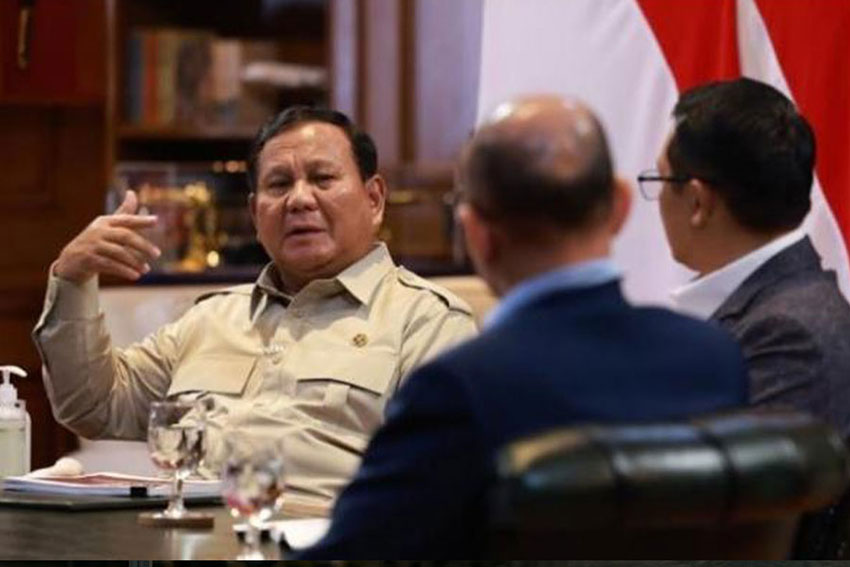
President Prabowo Subianto has affirmed that the Free Nutritious Meal Program (Makan Bergizi Gratis/MBG) will continue to run. This flagship program will not be affected by the government’s ongoing budget efficiency policy.
In response to current global uncertainties, the government is preparing to implement further budget efficiency measures. Funding for programs deemed less effective or merely ceremonial will be reduced. However, the budget allocated for MBG will remain intact.
Prabowo explained that MBG reflects the state’s commitment to its people. The program forms part of a broader human resource development strategy, targeting children and vulnerable groups. He emphasized that the program remains a priority as it addresses the basic needs of the population.
“I will continue (the MBG program) as much as possible. Rather than having funds corrupted, it is better that my people can eat,” Prabowo stated during a dialogue with several public figures and senior journalists at his residence in Hambalang, Bogor, West Java, as quoted on Tuesday (March 24, 2026).
Prabowo highlighted the importance of MBG in addressing malnutrition and stunting, which are still prevalent in various regions. He noted that he personally witnessed such conditions during visits to villages throughout his campaign period.
“An 11-year-old child with the body of a 4-year-old—I saw it myself in the field,” he said.
Beyond its social impact, Prabowo added that MBG also generates significant economic benefits. The program is capable of creating jobs across multiple sectors, from food production kitchens to supply chains.
“I am confident that I am on the right path,” he added.
The President estimated that at the peak of MBG implementation, there will be around 30,000 to 31,000 service kitchens across Indonesia. If each kitchen employs approximately 50 workers, the program could absorb around 1.5 million workers.
He further noted that each kitchen would collaborate with several food suppliers. If one kitchen involves 5 to 10 vendors, and each vendor employs about five farmers, the potential job absorption could increase by another 1.5 million people.
However, the President acknowledged that there are still shortcomings in the program’s implementation. The government has taken corrective actions, including shutting down kitchens that fail to meet established standards. “We have closed more than 1,000 kitchens,” Prabowo revealed.
He also assured that MBG financing does not rely on new debt, but rather on efficiency measures and the reduction of budget leakages. “We have the funds. We just need to organize them and minimize leakages,” said the Chairman of the Gerindra Party.
In terms of realization, the Ministry of Finance reported that as of March 9, 2026, MBG has reached approximately 61.6 million beneficiaries, with a budget realization of Rp44 trillion.
Deputy Minister of Finance Suahasil Nazara stated that beneficiaries are served by more than 25,000 Nutrition Fulfillment Service Units (SPPG) spread across Indonesia. The majority of recipients are school students, totaling around 50 million people. Another 10.5 million beneficiaries come from non-student groups, including pregnant women, breastfeeding mothers, and some elderly individuals.
Head of the National Nutrition Agency (BGN), Dadan Hindayana, stated that MBG will enter an expansion phase after Eid. “There are no plans to discontinue the program, as rumored,” he emphasized.
He explained that the number of SPPG units is targeted to reach around 25,000, serving more than 61 million beneficiaries nationwide. The government also ensures that meals will be prepared using fresh menus in accordance with established nutritional standards, “so that service quality improves and nutritional benefits are optimized for recipients,” Dadan added.
Regarding efficiency measures, the government is also preparing steps to reduce fuel consumption amid rising global oil prices. One of the plans includes implementing a Work from Home (WFH) policy for one day per week.
“With high oil prices, we need to improve work efficiency. Flexibility will be introduced to allow one day of Work from Home within a five-day workweek,” explained Coordinating Minister for Economic Affairs Airlangga Hartarto.
The government is also reviewing other cost-saving measures within the public sector, including the possibility of salary cuts for high-ranking officials. Minister of State Secretary Prasetyo Hadi stated that these steps are part of efforts to address global economic challenges.
“This is a lesson for all of us to become more efficient. The President has urged that efficiency measures begin within ministries and government institutions,” he said.
Prof. Dr. Drs. Ermaya Suradinata, SH, MH, MS
is an observer of geopolitics, geostrategy, and public administration.
 English
  Indonesian