
Local Democracy in the Revision of the 1945 Constitution: Deputy Heads of Regional Government Need Not Be Elected
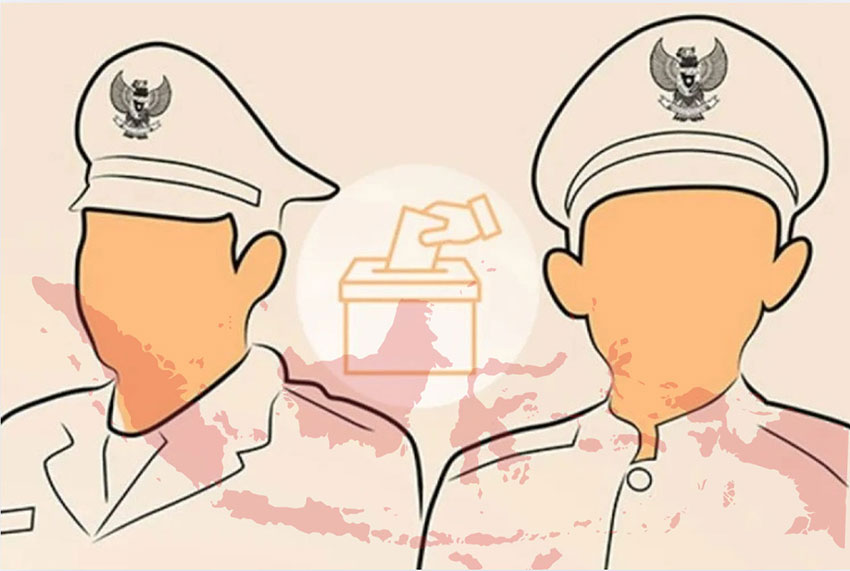
The debate surrounding the position of deputy regional heads has resurfaced alongside discourse on revising the Regional Government Law. Under the current system, regional heads and their deputies are elected as a single ticket, granting both equal political legitimacy in the eyes of voters. However, practical experience shows that equality of legitimacy does not always correspond to harmony in governance.
The phenomenon of post-election “breakups” between regional heads and their deputies reflects the reality that the single-ticket system is not always efficient, either politically or administratively. The proposed revision of the Regional Government Law now opens space for a new interpretation: deputy regional heads do not necessarily have to be directly elected together with regional heads, but may instead be appointed through internal mechanisms within regional governments.
From a constitutional perspective, this revision marks a paradigm shift from electoral democracy toward functional democracy. The Constitution does not explicitly require that deputy regional heads be elected, thereby granting lawmakers policy discretion (open legal policy) to adapt governance arrangements to the needs of modern administration. The trajectory of local democracy in Indonesia has never followed a straight path. It has continuously turned, risen, and fallen in response to national political dynamics, constitutional interpretations, and bureaucratic power struggles.
Throughout the long regulatory history of regional governance—from Law No. 5 of 1974 to Law No. 12 of 2008—one fundamental question has persistently echoed: must regional heads be elected as a package with their deputies, or is it sufficient for a single figure to represent the sovereignty of the people at the local level? This question is not merely a technical electoral issue, but a philosophical and constitutional one that determines the direction of Indonesian democracy—balancing popular legitimacy against the rationality of exercising power.
Article 18 paragraph (4) of the 1945 Constitution stipulates that “Governors, Regents, and Mayors, as heads of provincial, regency, and municipal governments respectively, shall be elected democratically.” However, the constitutional text stops at the term “head of regional government,” without mentioning the existence of a deputy. This omission constitutes the entry point for various legal and political interpretations. In the early reform era, when Law No. 22 of 1999 was enacted—followed by Law No. 23 of 2014 and Law No. 9 of 2015—the drafters understood “elected democratically” to refer to the regional head, not the deputy.
Deputy regional heads could be appointed based on organizational needs or administrative competence. This interpretation positioned the deputy as a functional element rather than a symbol of electoral legitimacy. However, with the enactment of Law No. 32 of 2004 and its subsequent amendments through Law No. 12 of 2008, Law No. 23 of 2014, and Law No. 9 of 2015 on Regional Government, this interpretation shifted. The election of regional heads and their deputies was mandated to occur as a single ticket.
Consequently, the meaning of “elected democratically” was expanded to a collective interpretation: not only the regional head, but also their partner, must be elected. This change reflects a transition from a “single executive” model to a “dual executive” model—from singular accountability to shared leadership. Democracy, under this new interpretation, is understood as a participatory process involving two figures elected simultaneously by the people.
However, behind the spirit of expanding popular legitimacy, this policy has introduced new and equally complex problems. The single-ticket election of regional heads and deputies significantly increases political costs. Each electoral contest requires substantial funding for campaigns, logistics, promotional materials, and voter outreach. With a system requiring two figures, these expenses multiply automatically, both in terms of state funding and candidate expenditures.
In an era where local democracy is increasingly costly, efficiency becomes a crucial concern. Democracy may indeed be expensive, but it does not have to be structurally wasteful. Beyond financial costs, there is also the issue of governmental effectiveness. In a single-ticket system, both the regional head and deputy possess equal political legitimacy because they are directly elected by the people.
Yet this equality of legitimacy is not accompanied by equality of authority. The regional head remains the highest authority, while the deputy functions merely as an assistant with limited powers. In practice, this structure frequently generates internal conflicts that undermine governmental cohesion.
Divided leadership can easily devolve into competition over authority—especially when each party harbors different political ambitions. In many regions, deputy regional heads have transformed from working partners into political rivals of the regional head in subsequent election cycles. Democracy, which was expected to foster collaboration, instead turns into an arena for ego clashes and power struggles.
In this context, a system that does not require deputy regional heads to be elected as a package with regional heads offers a more efficient and rational alternative. Under this model, an elected regional head may appoint a deputy based on professionalism, meritocracy, and alignment with the government’s vision.
The deputy regional head is no longer the product of inter-party political compromise, but rather a functional choice that supports governmental performance. Political costs can be significantly reduced, as elections focus solely on the regional head. This system also promotes bureaucratic stability, as it minimizes the risk of internal division stemming from conflicting political interests between two elected officials.
From a constitutional law perspective, this non–single-ticket model has a strong constitutional foundation. The 1945 Constitution never states that deputy regional heads must be elected through the same mechanism as regional heads. This means that lawmakers retain interpretative space to adapt governance mechanisms to contemporary needs. Law No. 22 of 1999 and the evolution of regional elections provide precedent by positioning the regional head as the sole democratically elected figure, while the deputy serves as an administrative component.
Prof. Dr. Ermaya Suradinata, SH, MH, MS
Former Director General of Socio-Political Affairs, Ministry of Home Affairs of the Republic of Indonesia (1999–2001)
Former Governor of the National Resilience Institute (LEMHANNAS RI) (2001–2005)
 English
  Indonesian