Alert to Global Geopolitics: Rare Earths at the Center of the Global Raw Materials War
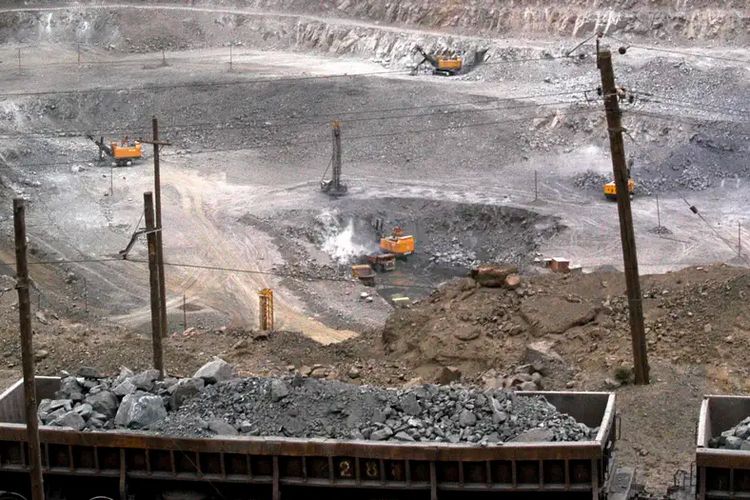
China’s dominance over rare earth metals once again revealed its geopolitical dimension throughout April–June 2025, when Beijing imposed new export controls (April 2025). Unsurprisingly, this immediately triggered shortages that shook global industries. Ford, for instance, was forced to halt part of its production in Chicago, United States. Likewise, in early June 2025, the European Union warned of factory shutdowns across several countries due to the permanent magnet crisis.
This chain of events demonstrates how a single policy decision in Beijing can reverberate deep into the heart of Western industry—from Detroit to Düsseldorf—exposing the fragility of dependence on a country that controls nearly the entire global refining capacity.
In an interconnected world architecture of such depth, power is no longer defined solely by military strength, but by the ability to regulate the flow of minerals that sustain digital civilization. China’s control over rare earth elements illustrates how power in the 21st century operates quietly—far from military parades and grand speeches—yet firmly embedded in the core of digital civilization.
These invisible minerals—embedded in smartphones, electric vehicles, radar systems, and fighter jets—have become the new language of global power. By controlling the majority of production and nearly all global refining capacity, Beijing effectively holds the industrial pulse of major economies.
An export regulation from China can disrupt Chicago, paralyze factories in Europe, or force Washington to renegotiate its sense of strategic confidence. Yet this crisis is more than a supply chain issue; it is a stark illustration of a shift in the course of history.
As U.S. companies shut down production lines and estimate that their rare earth stockpiles will be depleted within months, technological competition is transforming into a struggle for survival. Europe, almost entirely dependent on Chinese permanent magnets, finds itself in a fragile geopolitical landscape—a world where a single logistical rupture can threaten the future of its automotive, defense, and healthcare industries.
This dependence has evolved into collective anxiety: the fear that the future will no longer be determined by innovation, but by the ability to secure minerals largely ignored by the public.
Building a “Mineral Fortress”
It is therefore unsurprising that the G7, the European Union, and the United States are now attempting to construct their own “mineral fortresses.” From new refining facilities in Estonia and France to U.S. ambitions to tap Greenland’s potential, it is clear that the West is seeking to restructure its architecture of power.
However, this effort must navigate a long and winding path—shadowed by high costs, stringent regulations, and unforgiving timelines. China spent decades weaving its rare earth supply chain; the West hopes to replicate it within a decade.
This temporal gap has become a strategic gap, reshaping bargaining positions among states and forcing them to recalibrate their geostrategic calculations.
India has also entered this competitive orbit. Despite possessing large reserves, the country lacks sufficient refining capacity to rival China. Even New Delhi has had to restrict exports to secure domestic industrial needs. This phenomenon underscores that the contest over rare earths is a contest over knowledge, technology, and time—resources that cannot be acquired merely by extracting minerals from the ground.
As major powers negotiate access, pressure, and concessions, it becomes evident that geopolitics today is no longer about territorial borders, but about who controls the foundational materials that power the future.
At the center of this vortex, China holds a hand that is difficult to match. It can tighten or loosen export valves, raise or lower global prices, and activate or shut down factories abroad.
China’s dominance over rare earths did not emerge overnight; it grew like roots—slowly but inexorably penetrating deep into the earth. Today, China controls more than 60–70 percent of global production, nearly 90 percent of refining capacity, and the majority of neodymium-praseodymium (NdPr) permanent magnet manufacturing—the core of modern technological devices.
Since the 1990s, Beijing has structured this sector through strategies that attracted little global attention: nationalization of mining licenses, gradual yet massive investment in processing technologies, and environmental tolerance that allowed production costs to fall to levels unmatched by other countries.
In China’s hands, Rare Earth Elements (REEs) have transformed from mere chemical substances into geostrategic instruments. China controls not only deposits, but the entire value chain—from extraction and refining to element separation and advanced magnet production that drives the future economy.
At key moments, Beijing has demonstrated the fragility of global supply structures: in 2010, during heightened tensions with Japan, REE shipments were halted as a diplomatic signal. The world was reminded that raw materials can become a language of pressure, and minerals a tool of negotiation.
Amid a globalization that appears borderless, supply chains reveal that power always has a center of gravity. As U.S.–China rivalry enters a phase of technological warfare, REEs have become a quieter but far more decisive battleground.
The United States, the European Union, Japan, and their allies have begun to realize that building their industrial futures on deep structural dependence on China is akin to constructing on foundations that can be shaken at any moment.
Their concerns are not merely economic, but existential: fighter jets, warships, satellites, and radar systems all require rare earths. In the shadow of great-power rivalry, China’s dominance has evolved into a creeping strategic threat—pressing, constraining, and difficult to disentangle without destabilizing one’s own economy.
This asymmetric dependence creates a fragile political geography, like a long bridge supported by a single pillar. A world in need of stability instead finds itself facing a new fault line: REE supply chains could become triggers for global escalation.
Amid regional tensions, market uncertainty, and accelerated energy transitions, any supply disruption can unleash waves of instability rippling from the technology sector to defense strategies. This is the irony of the 21st century: the technological progress we celebrate rests on tiny elements that are extraordinarily vulnerable to politicization.
India’s “Third Path”
Within a global supply structure tilted toward a single center of gravity—China—India is emerging as a power gradually shaping its own form. The country is pursuing a different path, seeking to break free from Chinese dominance and move toward strategic autonomy.
Its efforts to develop a rare earth industry and expand export capacity are not merely economic policies, but political statements of its ambition to become an alternative player in the global critical minerals supply chain. India offers a kind of “third path”—a space between China’s hegemonic density and Western industrial consortia—potentially giving rise to new configurations in the global balance of power.
Western responses to India’s move resemble winds welcoming a shift in direction. The United States, Japan, and the European Union view India not only as a trade partner, but as a strategic node in confronting an increasingly intense technological war with China.
In a world beset by war tensions, energy crises, and supply vulnerabilities, collaboration with India forms part of an effort to strengthen Indo-Pacific supply chain stability. Beneath diplomatic negotiations lies hope that peace can be fostered through supply architectures resistant to politicization by a single dominant power.
Yet India’s journey does not unfold on level ground. Each step generates geopolitical ripples—from Chinese unease and intensifying price competition to diplomatic tensions simmering beneath the surface. Beyond external pressure, India must contend with its own technological limitations: underdeveloped refining capacity, environmental pollution risks, and social resistance in mining regions burdened by ecological costs.
India’s attempt to build this strategic industry resembles constructing a tall tower on a foundation still being reinforced—full of promise, yet laden with uncertainty.
In the context of maintaining Indo-Pacific geopolitical balance—a region now the primary stage of great-power rivalry—India’s presence offers significant opportunity. If India can become a stable REE supplier, regional dependence on China could gradually unwind.
Southeast Asian countries, including Indonesia, Japan, Australia, and even the European Union beyond the region, would gain new strategic maneuvering space. As supply centers diversify, tensions arising from raw material and technology competition could ease, reducing the risk of conflict rooted in sharp dependency structures.
Indonesia’s Geopolitical Interests
Within the geopolitical landscape of critical minerals, Indonesia stands between great promise and long-standing hesitation. Indonesia is, indeed, a large nation that has been slow to process its vast potential.
The country holds rare earths within tin deposits in Bangka Belitung, bauxite in Kalimantan, and nickel in Sulawesi—yet much of this potential remains untapped. Rare earths, now the neural core of technological civilization in the global economic map, linger in Indonesia as discourse rather than decisive action, as if the nation has yet to fully decide whether it wishes to truly participate in the new history of global industry.
Limited refining technology, regulatory misalignment, and stalled investment render this potential akin to latent energy—awaiting momentum and collective national will.
From a geopolitical perspective, REEs are not merely commodities; they are gateways to intellectual and industrial autonomy. Indonesia must not repeat the old pattern: exporting its soil while importing its future.
In a world defined by technological warfare and raw material competition, industrial sovereignty is a matter of national dignity. Indonesia’s path must therefore move from extraction to industrialization—from digging the earth to cultivating knowledge.
Refining, research and development, permanent magnet manufacturing, and advanced technologies must become the new lifeblood of development—a metamorphosis from a raw-material exporter into a future-building nation.
Indonesia’s geopolitical interests, in this context, rest on several interlinked orientations. These include securing its position in the global raw materials war through diversified technological partnerships—embracing Japan, South Korea, India, and Europe, while maintaining constructive relations with China.
Indonesia must dance between power poles without being trapped in their rivalry; it must stand as a nation that leverages global competition to strengthen itself, rather than becoming a battleground for external interests. REEs should also be positioned as part of a regional peace architecture.
With its free and active foreign policy, Indonesia holds moral standing to propose critical mineral governance that is peaceful, transparent, and sustainable. Amid Indo-Pacific turbulence, REEs can serve as instruments of diplomacy rather than sparks of conflict.
By acting as a balancing force, Indonesia not only safeguards its national interests, but also contributes to a broader ecosystem of regional stability.
In a world entering a “new technology-based Cold War,” a great nation like Indonesia must not remain a passive observer. It must emerge as an active actor—capable of interpreting geopolitical opportunities, strengthening sovereignty, and embedding peace as a strategic orientation.
Amid the roar of competition over critical minerals shaping the course of civilization, Indonesia is, in fact, being invited to rewrite its historical role—not in haste, but with clarity of vision; not through empty ambition, but with the awareness that tomorrow’s sovereignty depends on today’s courage.
Prof. Dr. Ermaya Suradinata, SH, MH, MS
Former Director General of Socio-Political Affairs, Ministry of Home Affairs of the Republic of Indonesia (1999–2001)
Former Governor of the National Resilience Institute (LEMHANNAS RI) (2001–2005)
 English
  Indonesian