Indonesia’s Pancasila-Based Geopolitical Interpretation of the China–Japan Crisis
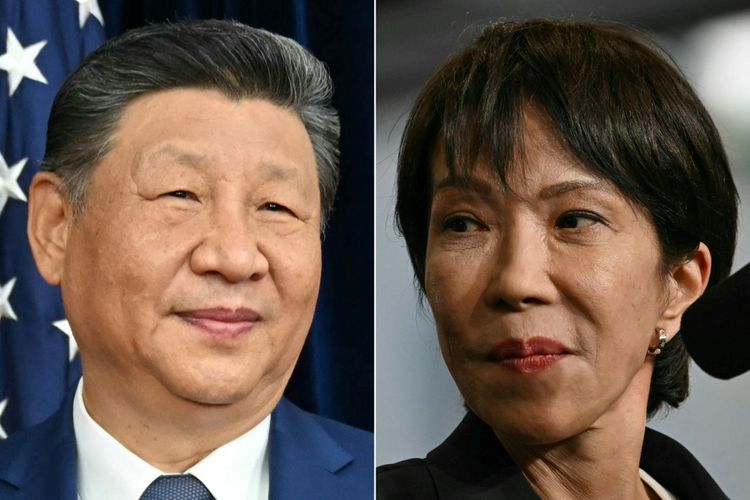
The rising tensions between China and Japan in recent days are not merely a diplomatic ripple triggered by Prime Minister Sanae Takaichi’s statement in October 2025. They are also the long echo of two nations with a history of hurting one another—of defining each other through conflict.
Behind that statement lies a shadow of history that never truly fades: imperial ambition, military aggression, and wounds embedded in East Asia’s collective memory. The 1937 Nanjing Massacre—claiming more than two hundred thousand lives—is not simply a dark record of the past, but a mirror that continues to reflect the moral fractures of history whenever the relationship between the two countries tightens again.
When Takaichi asserted that Japan could not remain silent if Taiwan were attacked, the statement reached far beyond the political podium; it entered a space laden with geopolitical sensitivity and fragile historical memory. Beijing perceived it as interference in its internal domain, and a hard reaction followed: rigid diplomacy, intensified military exercises, and extreme rhetoric—signaling that conflict unfolds not only on maps, but also in the psychological space of both societies.
Like a winter wind, this tension makes East Asia’s political air stiff again—thick with vigilance. Within this turbulence, Pancasila—particularly the principle of Just and Civilized Humanity—offers a moral lens for weighing every action and reaction. In a densely populated region such as East Asia, war is not merely an affair of great powers seeking to preserve influence; it is a tangible threat to the lives of billions. When two major powers sharpen their gaze at one another, what is endangered is not only investment or trade routes, but also human dignity, the security of ordinary families, and the future of generations yet unborn.
Amid the noise of nationalism and narratives of strength, Pancasila reminds us that civilization must be built on compassion, not fear. South of this epicenter, ASEAN—an organization that regards stability as the foundation of prosperity—feels the tremors acutely. Any escalation in the East China Sea can seep into dynamics in the South China Sea, affecting logistics routes, maritime security, and Southeast Asia’s diplomatic space.
Indonesia, as a moral anchor in the region, carries historical weight and normative responsibility to ensure that Asia does not again become a battlefield for great-power conflict. Through its free and active foreign policy, Indonesia finds room to present a calming voice—an invitation for states not to be trapped in the logic of historical vengeance.
Spilling Over into Southeast Asia
Taiwan, located only about 110 kilometers from Yonaguni—a small island at Japan’s far southwestern edge—is not merely a point on the map, but a delicate node where history, strategy, and human hopes converge. In the narrow space between these landmasses rests East Asia’s fragile balance.
Every political tremor in the Taiwan Strait spreads like an invisible wave—unseen yet strong enough to shake Tokyo’s strategic calculations. Japan, bound by its security treaty with the United States, views Taiwan as the first shield against the possible projection of Chinese military power into the Western Pacific—a bastion whose collapse would reshape the region’s entire security architecture.
For China, Taiwan is not simply a separated territory, but the core of its national narrative—a node believed to be destined to return to the body of the state. For Japan, Taiwan’s continuity is the foundation of regional stability that prevents East Asia from sinking into new tension. And for the United States, Taiwan is not only a democratic partner, but a critical hub in the global technology supply chain—especially semiconductors—and an instrument for maintaining a balance of power in the Indo-Pacific.
Amid these three interests, Taiwan becomes a silent space contested by the loud voices of great powers. And the reverberation does not stop in northern Asia. It travels into Southeast Asia, crossing winds and sea lanes, entering the narrow corridor of the Malacca Strait, the Sulu Sea, and the South China Sea.
ASEAN, as an economic artery linking the Pacific and Indian Oceans, is among the most sensitive regions to any shift in the Taiwan Strait. A large share of world trade—including the energy that sustains Japanese and South Korean industry—passes through these shipping lanes.
An open conflict around Taiwan would not only fracture political stability; it would also shake global logistics order, sever trade flows, and force the world to recognize once again how vulnerable the networks supporting modern life truly are.
Here, Pancasila speaks in a gentle but firm voice. Indonesia, as a maritime nation dependent on international sea-lane connectivity, understands that regional stability is not merely a diplomatic interest—it is a basic requirement for safeguarding national unity. Any major conflict in the north risks spilling into Southeast Asian waters, affecting maritime security, the national economy, and the welfare of communities living from the currents of global trade.
In this landscape, Indonesia must play its role: preventing ASEAN fragmentation and ensuring the organization remains a unified body in the face of great-power turbulence. The dynamics around Taiwan remind us that the world does not move in straight lines; it pulses through interwoven interests, histories, and human vulnerabilities.
Standing at the Indo-Pacific crossroads, Indonesia carries both a moral and geopolitical duty: to preserve peace, encourage dialogue, and ensure that Asia remains a place where differences do not break civilizations, but mature them.
Following the Winds of Geopolitics
Escalation between China and Japan does not remain confined to a diplomatic arena filled with symbols and hard gestures; it seeps into everyday economic life, touching people’s livelihoods in quiet yet significant ways. When Beijing once again halted imports of Japanese seafood, tourist flows from China dropped sharply, and more than five hundred thousand flight tickets to Japan were cancelled.
The world is realizing that geopolitical conflict is no longer a distant drama in the north, but a wild wind capable of disrupting the rhythm of people, commodities, and hope. Japan—long one of Asia’s most dynamic tourist destinations—suffered losses estimated between USD 500 million and USD 1.2 billion within weeks.
Yet the economy rarely leaves a vacuum; when one door closes, another opens. South Korea and Singapore experienced sudden surges of Chinese tourists, while Thailand, Malaysia, Vietnam, and Indonesia received positive spillovers—though still moderate and fragile in the face of political temperature shifts between the two East Asian giants.
This phenomenon underscores how modern economies move with geopolitical winds. For ASEAN, it is a large mirror revealing how tourism flows, logistics, investment, and business sentiment can change form within days.
Southeast Asia—long a buffer space between the Pacific and Indian Oceans—is being tested again. Indonesia, as the region’s center of gravity, sees opportunity amid uncertainty: strengthening air connectivity, designing tourism packages friendly to the Chinese market, and building economic diplomacy that projects Indonesia as a “Safe and Stable Destination in the Southern Indo-Pacific.”
But every opportunity carries a shadow of responsibility. In these short-term ripples, Pancasila becomes a moral compass to ensure Indonesia does not merely dance atop another country’s tension. Economic gains must not grow out of a neighbor’s suffering or instability; they must rest on a foundation that is solid and just.
Indonesia’s tourism industry must also be built through market diversification, infrastructure strengthening, and destination capacity development in regions long marginalized—Sulawesi, Kalimantan, and Nusa Tenggara—so that development benefits do not flow only to the center. This dynamic teaches that the world is shaped not only by great powers confronting one another, but also by the small choices made by countries determined to stand upright amid changing times.
ASEAN Needs Stability
ASEAN now stands at a complex crossroads where economic, security, and geopolitical interests intersect like sea currents colliding in a storm. On one hand, member states benefit from economic proximity to China and Japan—two principal engines of Asia’s growth. On the other hand, they deeply need stability and the principle of non-intervention to safeguard their respective autonomy.
The latest China–Japan escalation reveals hidden fault lines: some states lean toward Japan due to development assistance, while others are increasingly tied to Chinese investment through the Belt and Road Initiative.
Within ASEAN, diverse interests begin to move—like small islands pressed by a powerful northern current. In that vortex, Pancasila offers a gentle moral breath that reaches the heart of the matter. It reminds us that interstate relations must not lose their basic ethics: avoiding violence, respecting human dignity, and striving to preserve peace.
These values are reflected in ASEAN’s commitment to the Zone of Peace, Freedom, and Neutrality (ZOPFAN) and the ASEAN Outlook on the Indo-Pacific (AOIP), which reject militarization and affirm diplomacy as the primary pathway.
In a world increasingly inclined toward confrontation, Pancasila offers spiritual depth that guides wisdom. When Chinese warships operate in the same waters as Japanese aircraft fly low on the horizon, ASEAN faces its most important test: can it remain an anchor of stability in an increasingly turbulent region?
Preventive diplomacy, early warning mechanisms, and multi-layered dialogue—among governments, strategic thinkers, academics, and civil society—must be strengthened so that tensions do not become open conflict. ASEAN must not wait for the storm to break; it must learn to read the winds early, tighten cooperation knots, and build trust among member states.
Thus Indonesia—respected as a mediator and positioned at ASEAN’s heart—holds an irreplaceable role. The free and active principle opens space for Jakarta to serve as a communication bridge between rivals, offering a dialogue pathway that is impartial yet rich in wisdom.
Indonesia is not merely a calmer of tensions; it is a guardian of norms, ensuring the region’s future is not dictated by great powers viewing Southeast Asia as a chessboard—but by the nations living within it, seeking to live in peace.
Amid the roar of warships and sharp rhetoric of major powers, ASEAN must rediscover the meaning of togetherness. The most fundamental value is not taking sides, but the ability to become a safe space where peace can grow. Indonesia, grounded in Pancasila, can become a small flame guiding the region out of the darkness of tension toward the light of the future—a future built not by domination, but by justice, dialogue, and lofty humanity.
Indonesia’s Role
Indonesia holds a strategic position as a calm “silent balancer” in the space connecting East Asia and Southeast Asia. This position is not merely a product of geography, but the result of a long diplomatic record consistently choosing moderation over confrontation.
In the spirit of Pancasila, Indonesia’s leadership is not hegemonic; it is collective leadership rooted in wisdom and the willingness to listen. Amid China–Japan rivalry, Indonesia is called to become a quiet space where dialogue can blossom, not a stage where tensions are allowed to linger. This role manifests in Indonesia’s capacity to act as a diplomat safeguarding a peaceful status quo.
As demonstrated in the Cambodian peace process (1987–1991) and in sustaining stability on the South China Sea issue, Jakarta has a long tradition of facilitating difficult conversations that others hesitate to undertake.
In the current dynamics, Indonesia can again encourage informal China–Japan meetings, offer dialogue spaces on the margins of ASEAN forums, and position Jakarta as a venue for flexible, non-threatening Track 1.5 meetings. This task resembles placing a delicate weave between two heated metals: difficult, yet highly possible through patience and diplomatic precision.
At a time when the world is again filled with polarizing narratives, Indonesia must also ensure that the ASEAN Outlook on the Indo-Pacific (AOIP) does not sink beneath the waves of major powers’ strategies. As the United States and Japan promote Indo-Pacific Strategy frameworks and China advances the Belt and Road Initiative, Indonesia needs to remind all parties that the region requires a unifying geopolitical home, not one that divides.
Through a Pancasila lens, AOIP prioritizes equality between large and small states, democratization of economic gains, and rejection of domination by any single power. From this standpoint, AOIP is not only a diplomatic document, but an ethical manifestation of how Asia should be organized.
Behind regional tensions, Indonesia also sees economic opportunities that cannot be ignored. The diversion of Chinese tourists away from Japan creates space for Indonesia to increase direct flight frequencies—Shanghai–Bali–Manado—strengthen family-friendly and halal tourism diplomacy, empower local MSMEs, and reinforce tourism Special Economic Zones.
The China–Japan tension reminds the world that East Asia is a strategic flashpoint capable of shaping the future of the Indo-Pacific and even the global order. For Indonesia, regional stability is not only a geopolitical issue, but a moral imperative and an expression of national identity.
Pancasila provides a framework for reading these dynamics with clarity: upholding humanity, unity, justice, deliberation, and peaceful diplomacy. In an increasingly complex landscape, Indonesia must not remain a spectator; it must become a direction-setter, a trusted mediator, and a guardian of the noble values inherited since independence.
In this sense, the crisis in East Asia is not merely a threat, but an opportunity to reaffirm Indonesia’s role as an anchor of regional stability.
Prof. Dr. Ermaya Suradinata, SH, MH, MS
Former Director General of Socio-Political Affairs, Ministry of Home Affairs of the Republic of Indonesia (1999–2001)
Former Governor of the National Resilience Institute (LEMHANNAS RI) (2001–2005)
 English
  Indonesian