The World Is Unsafe Without Greenland: A New Geopolitical Alarm for Indonesia
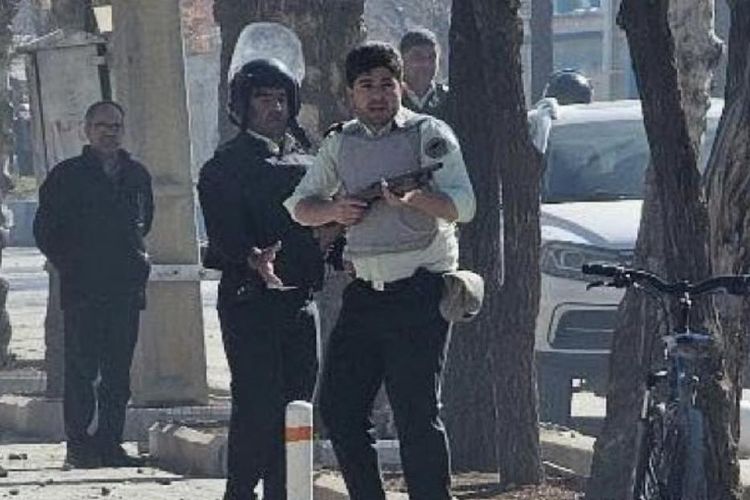
The beginning of 2026 has lifted the curtain on a new chapter of tension in the Middle East. Iran has been shaken by waves of protest that initially stemmed from an economic crisis but gradually evolved into nationwide political turbulence. On the streets of Tehran, demonstrations have escalated into violence, public facilities have been attacked, and weapons have begun to speak.
The government accuses foreign actors of infiltration, while the United States under Donald Trump has revived an old doctrine: the threat of military intervention in the name of protecting the people.
Here, history appears to repeat itself—when social suffering collides with global power ambitions, even a small spark can easily become a raging fire. It is entirely possible that this situation is not an isolated event, but rather a continuation of a longer sequence: the brief Iran–Israel war the previous year, Western sanctions that failed to cripple Tehran, and the fragility of the social contract between the Iranian state and its people.
As President Pezeshkian accuses the United States and Israel of training sabotage groups, and Trump threatens to strike if demonstrators continue to be killed, the world is once again confronted with an ancient dilemma: where is the boundary between state sovereignty and the legitimacy of humanitarian intervention? This question goes beyond international law; it is a moral gamble over who has the right to determine the fate of a nation.
Amid this escalation, China has taken a firm stance by rejecting interference in the internal affairs of other states. This statement is not merely diplomatic rhetoric, but a reflection of strategic interests and a declaration of a new global identity. With a single sentence on non-intervention, Beijing challenges Western hegemonic traditions and raises the banner of a multipolar order. Thus, the Iranian crisis transforms—from a domestic issue into a stage for great power rivalry.
Behind the rhetoric of human rights and stability lies a struggle for influence over energy resources, trade routes, and the architecture of the future world order. Yet beneath all these calculations, the Iranian people remain the most vulnerable souls—those demanding bread and justice, while living amid the shadows of weapons and propaganda.
This is the tragedy of 21st-century geopolitics: when human suffering becomes the gateway to global confrontation. An interconnected world ensures that every eruption in Tehran reverberates through energy markets, shipping lanes, and the prices of basic necessities thousands of kilometers away.
No crisis is ever truly distant; all are bound by the same planetary breath. Indonesia must therefore take notice. A “free and active” foreign policy must not remain a rhetorical inheritance, but evolve into strategic awareness: maintaining distance from great power rivalries while being present as a peacemaker that offers diplomacy rather than explosions.
The True Test of a Free and Active Foreign Policy
The crisis now shaking Iran is not merely a domestic upheaval in a Middle Eastern nation. It is an echo of a fractured world. Social protests born of economic hardship have transformed into political turbulence and then expanded into an arena of global power competition.
Threats of U.S. military intervention, accusations of Israeli sabotage, and China’s firm rejection of foreign interference have turned Iran into more than a troubled state—it has become a test node for the global order. Within this vortex, Indonesia’s relevance as a major non-aligned country is once again tested: are we merely spectators, or careful readers of the times?
Indonesia’s “free and active” foreign policy, long the anchor of its diplomacy, now faces a real challenge. In the past, this principle was forged to maintain distance from the Cold War. Today, it is tested amid a new contest of influence between the United States and China, with Iran as the battleground.
Tensions in the Persian Gulf are not distant issues for Indonesia. Rising oil prices due to Iranian instability can strain the state budget and weaken people’s purchasing power. Disruptions in the Strait of Hormuz can ripple through trade routes all the way to the Strait of Malacca. An interconnected world ensures that explosions in Tehran are felt in the kitchens of households across the archipelago.
Yet Indonesia’s interests are not limited to economics and trade. There is a moral mandate embedded in the constitution: to reject colonialism and oppression. When the Iranian people face violence, humanitarian conscience is stirred. But history also teaches that foreign military intervention often produces destruction far greater than the regime it seeks to replace. Here, wisdom is tested: how to defend humanity without legitimizing unilateral domination.
Between these two extremes, Indonesia must stand as a balancer of global reason. Indonesia’s strategic role in the context of the Iranian crisis should rest on three pillars. First, as a voice of the Global South, Indonesia can revive the spirit of Bandung: rejecting hegemony, opposing unilateral intervention, and promoting equal dialogue among nations.
Second, as a bridge of civilizations, Indonesia possesses historical capital to encourage consultative forums between the Islamic world and global powers so that the Iranian conflict does not escalate into open war.
Third, as a maritime nation, Indonesia has a vested interest in safeguarding global sea lanes, strengthening energy diplomacy, and building national resilience against global price shocks.
At the same time, the Iranian crisis reminds us that the world is moving toward a new and unstable order, where local crises can quickly turn global. In such a world, a free and active foreign policy must not remain historical romanticism, but become a survival strategy. Indonesia must emerge as a reader of the winds, a guardian of balance, and a steadfast peacemaker.
For the real question is not only who will prevail in Tehran, but whether Indonesia is prepared to safeguard its dignity and interests amid an increasingly uncertain world.
The Middle East at the World’s Flashpoint
Today’s Iranian crisis once again underscores that the Middle East has never lost its position as the epicenter of global geopolitics. The region is not merely an oil field powering the global industrial engine, but a crossroads of major power interests: the United States, China, Russia, and regional actors such as Israel, Saudi Arabia, and Turkey.
Here, energy, ideology, and power intertwine, creating a space where local conflicts easily escalate into global confrontations. Should military intervention against Iran truly occur, a domino effect would be inevitable. The Strait of Hormuz—through which one-third of the world’s oil trade passes—could be blocked by war or sabotage. The result would be surging energy prices, shaken financial markets, and a jolt to the global economy.
Conversely, if Iran manages to endure and contain its internal crisis, the anti-Western axis will solidify further, accelerating the emergence of the multipolar order now taking shape. Thus, the outcome of the Iranian crisis will determine not only the fate of one country, but the direction of global power balance.
In this context, China’s stance becomes crucial. Beijing’s call for restraint and rejection of intervention is not merely diplomatic ethics, but a signal that China seeks to position itself as an alternative guarantor of global stability. Energy diplomacy, infrastructure investment, and mediation roles are becoming new instruments of Chinese power to challenge Western dominance. The Middle East is no longer America’s “backyard,” but a central stage for competition in the emerging world order.
For Asia, the Iranian crisis is not a distant event confined to foreign news. Energy routes from the Persian Gulf fuel East and South Asian economies. Disruption in Iran therefore means disruption to global supply chains.
U.S.–China tensions reflected in Tehran also risk spilling into the Indo-Pacific, linking conflicts from Taiwan to the Persian Gulf into a single network of strategic rivalry.
The maritime domain has become a shared space for interconnected conflicts. At this point, Indonesia must confront a new reality. As a maritime nation and middle power, Indonesia cannot separate its national security from the stability of the Indian Ocean and the Indo-Pacific.
The Iranian crisis is a reminder that the world is increasingly interconnected, and tension in one node will spread to others. Therefore, Indonesia must strengthen regional diplomacy, energy resilience, and its active role in maintaining maritime stability. In a world united by seas and trade, safeguarding global balance also means safeguarding the nation’s future.
Toward a Multipolar World
Beyond regional turmoil, the Iranian crisis signals an acceleration toward a multipolar world order. The United States can no longer act unilaterally without accounting for responses from China and Russia. Yet China itself is not fully ready—or willing—to assume the role of hegemonic guarantor of global stability. The world is moving through a gray zone of power, where uncertainty has become the new norm.
In this vortex, middle powers like Indonesia gain greater room for maneuver, but also face the risk of being drawn into rivalries that are not their own. In such a fluid world, the Iranian crisis reflects how international stability is never final—it is continually renegotiated through energy interests, trade routes, ideology, and threat perceptions.
When the Strait of Hormuz trembles, global oil prices pulse. When Tehran erupts in protest, global markets shudder. This chain of cause and effect shows that geographic distance no longer equates to strategic distance. The world is bound by dense networks, and one burning node can heat the entire system.
Indonesia must read the winds of history with clarity. Excessive proximity to one power pole risks eroding strategic independence and the spirit of a free and active foreign policy. Yet excessive passivity risks reducing Indonesia to a mere spectator on a stage that determines its own fate.
Between these extremes lies a middle path: strengthening strategic autonomy by deepening multilateral diplomacy, building energy resilience, and reinforcing maritime defense capacity as a shield for national interests. Here lies Indonesia’s opportunity.
A multipolar world offers space for middle powers to act as balancers, mediators, and advocates of a new global ethic grounded not in domination, but in dialogue. Indonesia’s track record in the Non-Aligned Movement, ASEAN diplomacy, and the G20 provides valuable capital.
In the Iranian crisis, Indonesia can speak as a representative of the Global South—rejecting unilateral intervention while also rejecting violence against civilians. This stance is not passive neutrality, but principled alignment.
In a world moving toward multipolarity, Indonesia must not lose its compass. A free and active foreign policy must be translated into courage to take a stand, firmness in safeguarding sovereignty, and intelligence in reading change.
Geopolitics as a Mirror of National Destiny
What is unfolding on the streets of Tehran today is not merely a national upheaval, but an echo of a world order being reborn through struggle. American threats of intervention, China’s firm rejection, and Iran’s resistance form a new geopolitical triangle. Beneath these power plays, people become the battleground of moral narratives: who defends freedom, who protects sovereignty, and who truly creates chaos.
History, as always, is written by those able to impose their interpretation. For Indonesia, this crisis is a warning. The world is entering an era of heightened uncertainty, where sovereignty, human rights, energy, and maritime stability intertwine in a tight knot.
Indonesia cannot remain a distant spectator at the edge of the stage. Every wave from the Persian Gulf will be felt in the Strait of Malacca; every oil price shock will touch household kitchens; every escalation of conflict will shake trade routes that form the lifeblood of the national economy.
The question is no longer whether Indonesia must respond, but how far it is willing to play its role. The principle of a free and active foreign policy must not stop as a historical slogan, but be transformed into a modern geopolitical strategy.
From Bandung 1955 to Jakarta 2026, the red thread remains the same: rejecting domination, rejecting new forms of colonialism, and promoting dialogue as the path forward. But times have changed, and diplomacy must now be paired with the intelligence to read maritime power, energy, and technology as instruments of influence.
Amid the global contest of narratives, Indonesia holds important capital: moral legitimacy as a major Global South nation, experience as a regional peacemaker, and a strategic position at the heart of the Indo-Pacific. In the Iranian crisis, Indonesia can voice opposition to unilateral intervention while simultaneously rejecting state violence against its own people.
This dual stance is not a contradiction, but a reflection of Pancasila—humanity and sovereignty walking side by side. It is a middle path that is increasingly rare in a world drawn to extremes.
From Tehran to Jakarta, geopolitics is a mirror of the future. Amid the rumble of war threats from the Persian Gulf to the South China Sea, only nations that think strategically will endure. Indonesia has the history, position, and legitimacy to play that role. What is needed now is political courage and clarity of vision.
Prof. Dr. Ermaya Suradinata, SH, MH, MS
Rector of IPDN (2015–2018); Former Director General of Socio-Political Affairs, Ministry of Home Affairs of the Republic of Indonesia (1999–2001); Former Governor of the National Resilience Institute (LEMHANNAS RI) (2001–2005)
 English
  Indonesian