Indonesia’s Geopolitics Amid the Shadow of World War III
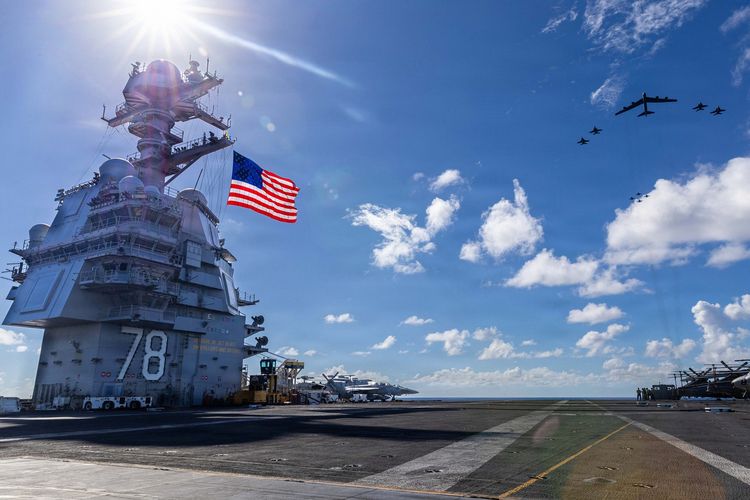
Tensions between the United States and Iran have resurfaced following a stern warning issued by President Donald Trump, accompanied by a firm diplomatic deadline. The deployment of military forces to strategic areas indicates that what initially appeared as rhetorical dynamics has shifted toward tangible power projection.
Within an increasingly fragile international system, such moves are not merely intended as bilateral signals. They also constitute a strategic message to the global community that power politics remains a primary instrument in safeguarding national interests.
The Persian Gulf holds vital significance for global energy stability. It is home to the Strait of Hormuz, through which approximately one-third of global oil trade passes. Any disruption along this route would almost certainly trigger spikes in energy prices and inflationary pressures across countries.
Rising oil prices do not stop at the energy sector alone; they cascade into logistics costs, food prices, and ultimately the purchasing power of society. Given the highly interconnected structure of the global economy, military escalation in a single geographic point can generate a domino effect across multiple sectors.
The situation becomes even more complex as it unfolds alongside other unresolved crises. The conflict between Russia and Ukraine continues, while rivalry between China and the United States in the Indo-Pacific region intensifies.
Tensions in the Red Sea and instability in parts of Africa suggest that the world is entering a phase of multipolar uncertainty. In this context, escalation in the Persian Gulf could accelerate the fragmentation of the global order. Countries may be driven to strengthen security alliances and secure their respective energy supplies, potentially igniting a new competition for influence.
Such conditions risk shifting global priorities from economic cooperation toward security calculations, thereby hampering post-pandemic economic recovery and widening inequalities among nations.
For Indonesia, these dynamics serve as a reminder that the stability of global maritime regions has direct implications for national economic resilience. As a country dependent on trade and energy imports, Indonesia must strengthen peaceful diplomacy, diversify energy sources, and reinforce logistical resilience.
Amid multipolar uncertainty, Indonesia’s “free and active” foreign policy must remain an anchor, enabling the nation to safeguard its national interests while contributing to global stability.
Energy Vulnerability
Escalation of conflict in the Middle East also carries direct implications for Indonesia’s energy resilience. Dependence on oil imports renders the national economy highly sensitive to global price fluctuations. When oil prices surge due to geopolitical tensions, the burden of energy subsidies and compensation within the state budget (APBN) increases accordingly.
Such conditions narrow the government’s fiscal space, even as social spending remains crucial to maintaining public purchasing power. Rising energy prices affect not only fiscal stability but also trigger inflation that spreads across sectors. Transportation costs increase, basic commodity prices rise, and industries face mounting production pressures.
In such circumstances, low-income groups are the most vulnerable. If prolonged, these pressures may slow economic growth and widen social inequality.
These impacts demonstrate that conflict in the Persian Gulf is not merely a distant geopolitical issue, but one with tangible consequences for domestic economic stability. Dependence on energy supplies from conflict-prone regions exposes the national economy to external shocks.
Therefore, strengthening energy resilience must be viewed as an integral component of national security strategy.
Energy policy reform is a step that can no longer be postponed. Diversifying energy sources through accelerated development of renewable energy must be pursued consistently. Additionally, expanding domestic refinery capacity and establishing strategic energy reserves will help reduce dependence on imports.
Such measures not only contribute to economic stability but also enhance Indonesia’s position in navigating global geopolitical dynamics. Accordingly, energy resilience should be positioned as a priority agenda in national development planning.
Policies oriented toward energy independence will provide protection against external shocks while supporting the transition toward a more sustainable economy.
In the context of global uncertainty, strengthening energy resilience is not merely a policy option—it is a strategic necessity for Indonesia’s future.
Indonesia’s Strategic Position
As an archipelagic nation, Indonesia is highly dependent on the smooth functioning of international sea trade routes. Approximately 40 percent of national trade relies on maritime transportation, making the stability of global shipping lanes a crucial economic factor.
Military tensions in strategic areas such as the Strait of Hormuz and the Red Sea could increase global logistics costs, ultimately affecting domestic prices and commodity distribution.
Rising global logistics costs would directly impact national supply chains, particularly for imported goods and industrial raw materials. The manufacturing, trade, and food sectors are among the most vulnerable to distribution disruptions.
Over the long term, pressures on logistics costs may reduce the competitiveness of national products and slow economic growth. Therefore, stability in international maritime routes is closely linked to Indonesia’s economic resilience.
In this context, Indonesia’s vision as the Global Maritime Fulcrum becomes increasingly relevant. Strengthening maritime security, modernizing coastal guard fleets, and enhancing the capacity of strategic ports are essential steps to ensure the smooth flow of goods.
Furthermore, the development of integrated maritime infrastructure will help reduce domestic logistics costs and improve interregional connectivity.
Indonesia must also reinforce maritime security cooperation in the Indo-Pacific region to ensure that shipping lanes remain safe and open. Collaborative approaches through joint patrols, information sharing, and confidence-building mechanisms among countries are key to maintaining regional stability. These efforts not only enhance security but also support the continuity of international trade.
At the same time, ASEAN’s role as a regional stabilizing anchor must continue to be strengthened. Amid major power rivalries, ASEAN must uphold neutrality and promote peaceful conflict resolution through diplomatic mechanisms.
Regional stability will serve as an important buffer for Indonesia in facing global uncertainty while safeguarding national interests amid evolving geopolitical dynamics.
Free and Active Diplomacy
In confronting increasingly complex global conflict dynamics, Indonesia’s free and active foreign policy remains a strategic foundation. Through multilateral forums such as the United Nations and the Organization of Islamic Cooperation, Indonesia can promote de-escalation and peaceful conflict resolution.
As the country with the largest Muslim population in the world, Indonesia also possesses moral legitimacy to advance dialogue, mediation, and preventive diplomacy in responding to global tensions.
At the same time, external diplomacy must be accompanied by strengthened domestic resilience. Coordination of fiscal and monetary policies is crucial to anticipating energy price volatility and imported inflation pressures.
The government, together with Bank Indonesia, must prepare rapid response scenarios to ensure economic stability. Protection for vulnerable groups must also be reinforced through well-targeted subsidies and strengthened social safety nets.
In the long term, energy independence must be integrated into Indonesia’s grand national development strategy. Investment in renewable energy, improved energy efficiency, and the development of energy storage technologies will enhance economic resilience against external shocks.
These steps will not only stabilize domestic conditions but also strengthen Indonesia’s position in an increasingly competitive global geopolitical landscape.
Escalation of conflict in the Persian Gulf should be understood as part of broader international system dynamics. The world may not yet be in an open global war, but signs of fragmentation, major power rivalry, and militarization of energy routes indicate rising risks of systemic conflict.
This situation serves both as a test and an opportunity for Indonesia to strengthen energy resilience, maritime stability, and consistency in its free and active foreign policy.
While Indonesia cannot determine the course of global conflicts, it can determine its own level of vulnerability. Through anticipatory, integrated policies grounded in national resilience, Indonesia can not only minimize the impact of crises but also reinforce its strategic position amid shifting global order. It is here that the ability to interpret global risks and transform them into national strategy will shape Indonesia’s geopolitical direction in the years ahead.
Prof. Dr. Ermaya Suradinata, SH, MH, MS
Rector of IPDN (2015–2018), Director General of Social and Political Affairs – Ministry of Home Affairs (1999–2001), and Governor of Lemhannas RI (2001–2005).
 English
  Indonesian