PD III Warning on the Venezuela Case: Indonesia Must Remain Vigilant (Part I)
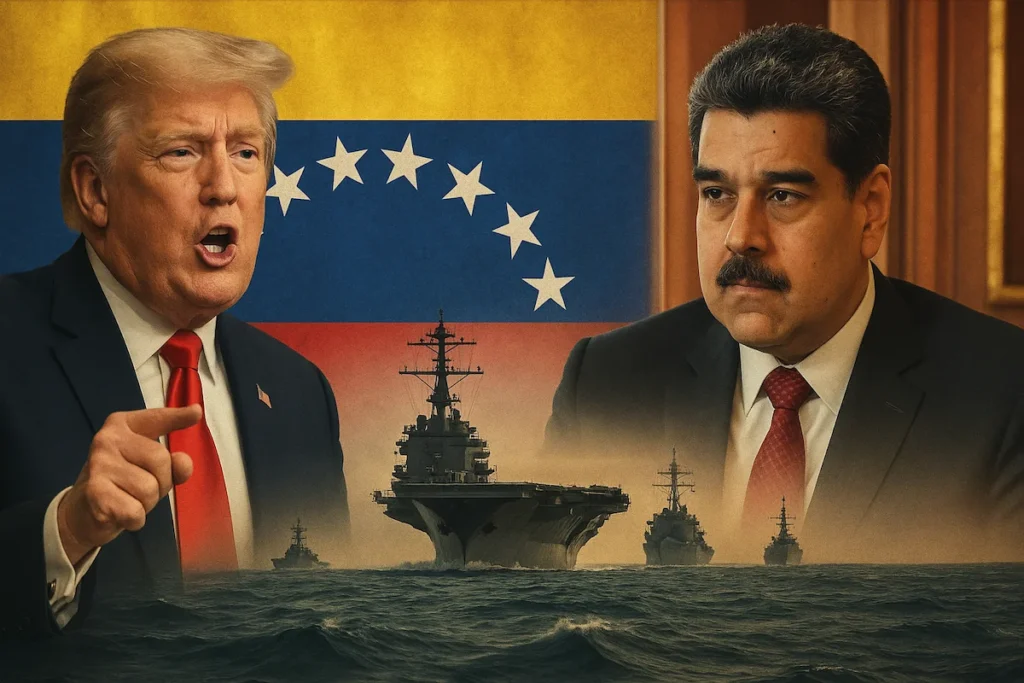
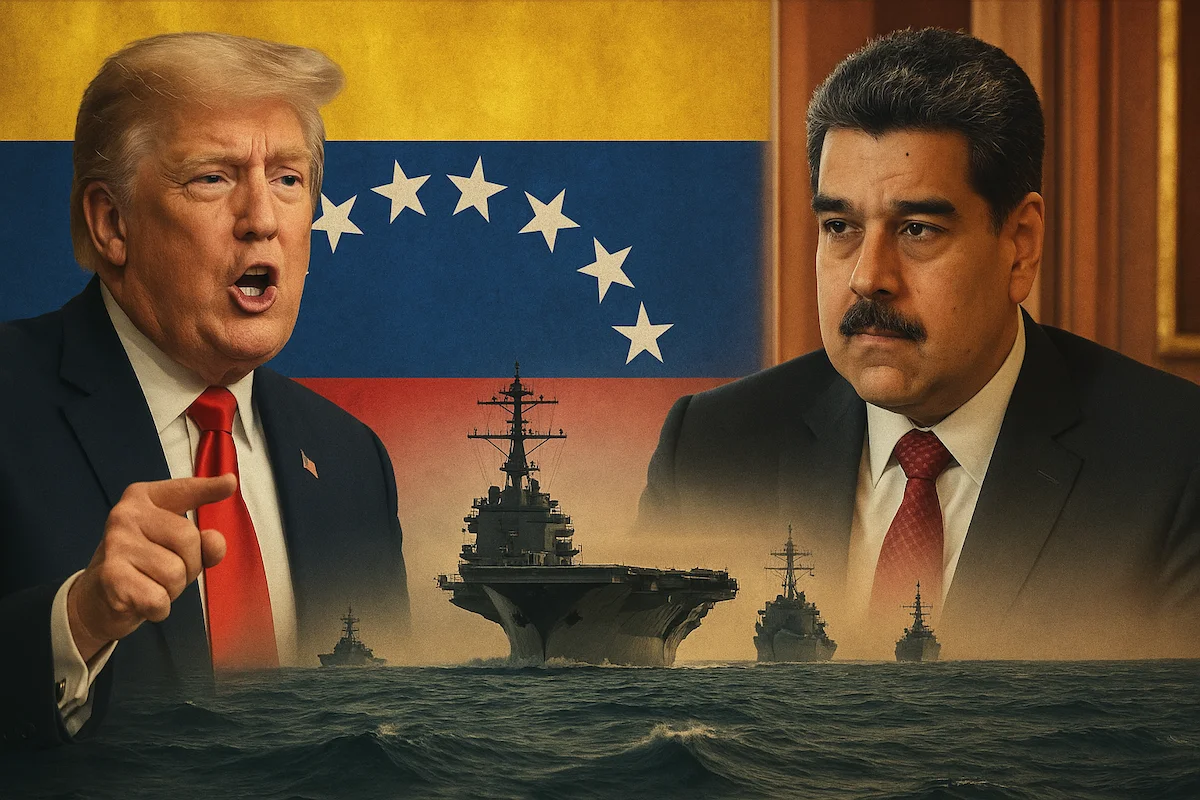
The United States’ attack on Venezuela in early January 2026 cannot be understood as an isolated geopolitical outburst, let alone as a merely normative response to issues of narcotics, democracy, or human rights. It is a fragment of a larger mosaic of global power that has begun to fracture—a signal that the world is moving along the edge of systemic tension.
Behind the roar of missiles, diplomatic pressure, and economic sanctions lies a quiet yet decisive struggle: a contest for control over energy, currency, and the legitimacy of the world order. From the perspective of Pancasila—particularly the principle of a just and civilized humanity—such conflicts should be measured by their impact on human dignity.
When the suffering of civilians is reduced to a “geopolitical cost,” the world is drifting away from humanistic values and toward the logic of naked power—a classic condition that has often served as the gateway to large-scale global conflict. Venezuela thus becomes a flashpoint because it dares to touch the very heart of a system that has underpinned global dominance for decades: the petrodollar.
When oil—the lifeblood of modern civilization—is traded almost exclusively in dollars, the world is compelled to submit to a single monetary language. Venezuela’s attempt to sell oil outside the dollar is not merely an economic policy; it is a political act of defiance against an unequal old order. History reveals a consistent and troubling pattern: Iraq, Libya, and now Venezuela have all faced intense pressure after attempting to redefine their energy and monetary sovereignty.
In this context, violence is not an anomaly but a system-preserving mechanism. As dominance tends to be maintained through coercion, conflict ceases to be merely regional and risks accumulating into global escalation—a path toward the possibility of World War III, born not solely of ideology but of an old system’s failure to accept historical change.
For Indonesia, the Venezuela case is a strategic warning that must not be ignored. Pancasila, with its spirit of unity, deliberation, and social justice, demands vigilance in reading a global power map that is increasingly harsh and fragmented. Asta Cita affirms that genuine development must not rest on fragile structural dependencies, especially on a single global economic system laden with vested interests.
Therefore, energy sovereignty, economic diversification, and the courage to build equal international partnerships are not ideological preferences but historical necessities. Venezuela reminds us that the path to independence is indeed lonely, costly, and risky—but the loss of sovereignty carries a far greater danger, not only for a single nation but for a world that fails to heed the signs of the times before it is too late.
Venezuela’s decision to sell oil outside dollar denomination is not a mere technical economic policy; it is a political–economic act that challenges the foundations of the petrodollar system. Rooted in the U.S.–Saudi Arabia agreements of the 1970s, this system has made the dollar the sole language of global energy. As long as oil—the lifeblood of modern civilization—is traded in dollars, the world is compelled to accumulate and depend on a currency controlled by a single country.
At that point, the dollar ceases to be a neutral medium of exchange; it becomes a symbol of global power sustained by humanity’s most basic needs. The petrodollar operates silently. It requires no declarations of war or overt colonization. It weaves dependency gradually through global habits inherited and accepted as inevitabilities. Other countries must work hard to obtain dollars, maintain reserve stability, and submit to its fluctuations, while one country can create it through its own domestic political will.
This advantage does not arise solely from aircraft carriers or advanced weaponry, but from long-unquestioned global acceptance. Precisely because it appears stable, many forget that the system’s foundation is fragile—it rests on a single condition: oil must continue to speak in the language of the dollar. When that language begins to be translated into others, geopolitical tremors become unavoidable.
It is within this context that Venezuela must be read. A country with the world’s largest proven oil reserves seeks to escape an old trap, expand energy cooperation with China, Russia, and fellow Global South nations, and redefine its economic sovereignty. The response it receives is almost always the same: sanctions, isolation, delegitimization, and ultimately military pressure. The justifications change, but the pattern remains consistent.
History offers an unvarnished mirror. Iraq once attempted to replace the dollar with the euro in its oil transactions, and the world witnessed how a monetary decision was answered with invasion. Muammar Gaddafi envisioned an African gold dinar, and Libya was destroyed before that dream could mature. Venezuela now walks a similar path, as if there were an invisible line that must not be crossed—despite the fact that this line was never fairly agreed upon by the international community.
This pattern sends a troubling message in an increasingly polarized world. Under such conditions, discourse about World War III no longer sounds hyperbolic, but rather like an early warning of accumulated tensions that fail to find resolution through equal dialogue. Here, the principle of democracy guided by wisdom through deliberation finds global relevance: a healthy world order should be built through inter-nation deliberation, not unilateral coercion.
For Indonesia, the attack on Venezuela is not distant or foreign news. It is an echo of recurring history—a reminder that political and economic sovereignty is never granted freely. As a nation born from struggle against domination and guided by Pancasila as a moral compass, Indonesia is called upon to read the direction of historical winds with vigilance. (To be continued)
Prof. Dr. Ermaya Suradinata, SH, MH, MS
Rector of IPDN (2015–2018); Former Director General of Socio-Political Affairs, Ministry of Home Affairs of the Republic of Indonesia (1999–2001); Former Governor of the National Resilience Institute (LEMHANNAS RI) (2001–2005)
 English
  Indonesian