Middle East Geopolitics at the Crossroads of Peace
THE Gulf of Oman has once again sent a stark message to the world: war never remains confined to where it begins.
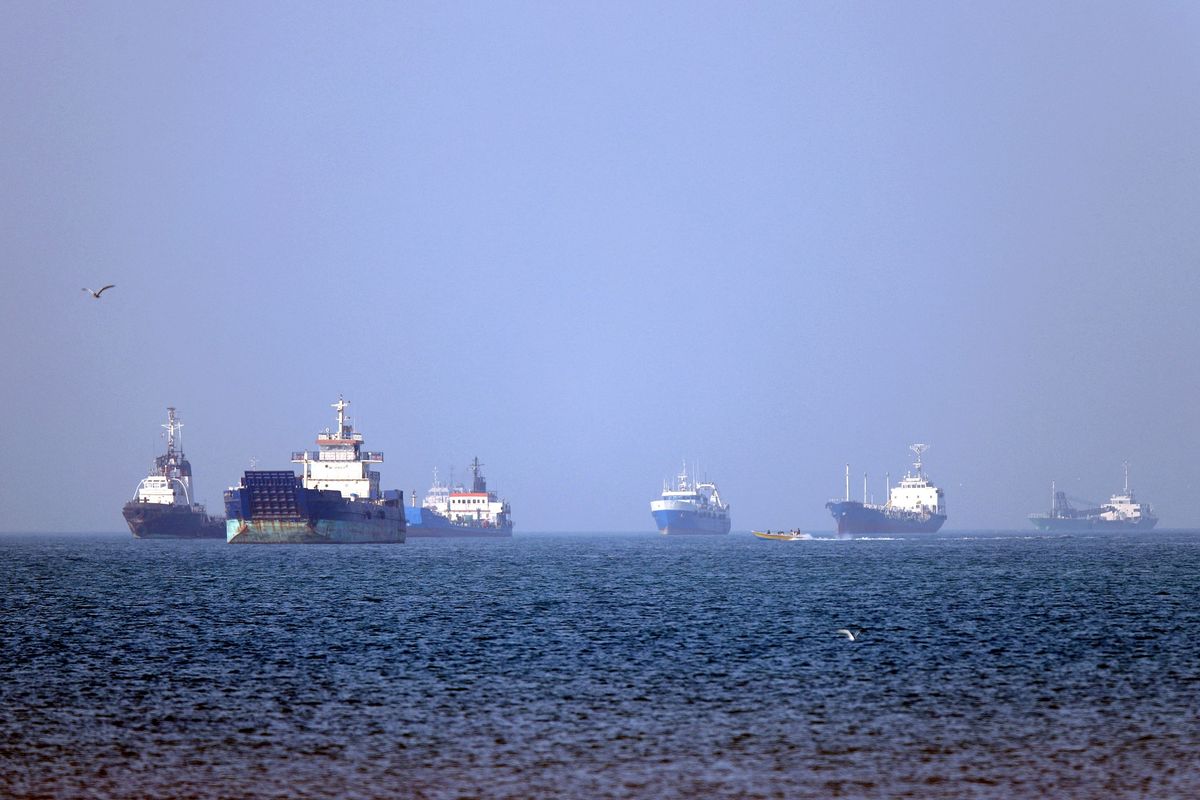
On September 8, 2026, the United States Central Command (CENTCOM) announced that its forces had destroyed five Iranian oil tankers, four in the Gulf of Oman and one near Kharg Island.
Tehran subsequently retaliated. Iran’s Islamic Revolutionary Guard Corps (IRGC) said it had attacked several vessels around the Strait of Hormuz and launched missiles at a United States military base in Jordan.
The Jordanian government stated that its air defenses had intercepted 18 of the 20 missiles fired.
This series of attacks marked one of the most significant escalations against maritime shipping during the six months of the US-Iran war. More alarmingly, the sea has now become an integral part of the logic of warfare.
Oil tankers, which should be transporting energy to sustain global industries, have now become part of military calculations. Waters that have long served as corridors of trade are turning into zones of threat.
This is a critical development that Indonesia must assess with geopolitical vigilance. The Strait of Hormuz is not merely a distant waterway far from the Indonesian archipelago. It is a strategic chokepoint connecting the Persian Gulf with the Indian Ocean and serves as a vital route for global energy supplies bound for Asia.
When this route is disrupted, the consequences do not stop in the Middle East. They ripple through oil prices, shipping costs, insurance premiums, logistics, inflation, and ultimately reach Indonesia’s economy.
In recent days, Brent crude oil prices have even surpassed US$100 per barrel amid growing uncertainty over global supplies.
The Hormuz issue, therefore, is also an Indo-Pacific issue. Energy from the Middle East flows toward India, China, Japan, South Korea, and other Asian countries through an interconnected network of maritime routes.
Conflict at one strategic chokepoint can create pressure at another. For Indonesia, as an archipelagic nation, these developments must not be viewed merely as a military conflict, but as a transformation of the broader strategic environment.
The Middle East Refuses to Be a Chessboard
There is an irony in the latest developments. The countries closest to the center of the conflict have the strongest reasons to bring it to an end.
Saudi Arabia, Qatar, the United Arab Emirates, Kuwait, Oman, and other Gulf states understand that a prolonged war could undermine the economic development, investment, energy infrastructure, and social stability they have worked to build.
The Middle East is learning from its own history. Security cannot continuously be built by accumulating more weapons while allowing the roots of distrust to deepen.
Every attack produces another attack. Every retaliation creates a new justification for further retaliation. In such a cycle, even military victory does not necessarily produce political peace.
The tendency of regional countries to avoid direct involvement therefore carries significant geopolitical meaning. They do not want to become a chessboard for the rivalry between the United States and Iran.
They want to become actors capable of determining their own future. Such an attitude demonstrates that national interests are increasingly being placed above bloc loyalty. Yet threats are also emerging from another direction.
Houthi attacks on Saudi territory and energy facilities demonstrate how conflict can spread through non-state actors.
Recent Houthi attacks have caused dozens of casualties and targeted Saudi military facilities and oil infrastructure.
Meanwhile, Pakistan has sought to pressure Iran to help restrain the Houthis, while emphasizing that its defense support for Saudi Arabia is not intended to widen the war.
The Middle East therefore faces two choices. The first is to allow the conflict to escalate into a regional war that disrupts the Gulf, the Strait of Hormuz, the Red Sea, and global energy markets.
The second is to reopen the space for diplomacy. The latter is undoubtedly more difficult because it requires patience, compromise, and political courage.
Yet precisely when weapons are speaking ever more loudly, diplomacy acquires even greater strategic value.
From Hormuz to the Indo-Pacific
At the same time, the Hormuz crisis also has consequences for the balance of power in the Indo-Pacific.
The United States now faces a strategic dilemma: maintaining pressure on Iran while simultaneously preserving its military credibility and strategic attention in the Asia-Pacific region.
Every additional resource deployed to the Middle East could potentially reduce Washington’s strategic flexibility elsewhere.
China, India, Japan, and South Korea all have direct interests in maintaining the stability of energy routes from the Gulf. For China, energy security is closely linked to the sustainability of its industries and economic growth.
For India, relations with the Gulf states encompass energy, trade, diaspora communities, and security. Japan and South Korea are also heavily dependent on maritime routes to meet their energy needs.
A conflict in Hormuz can therefore alter the strategic calculations of major Indo-Pacific powers. An energy crisis can influence economic policy.
Maritime tensions can affect naval postures. A greater concentration of US military forces in the Middle East can influence China’s perception of strategic opportunities in East Asia.
Indonesia, meanwhile, must not view these developments through the lens of competing blocs. Precisely when major powers are becoming increasingly fragmented, Indonesia’s interest lies in ensuring that the Indo-Pacific does not become an arena of permanent confrontation.
Indonesia needs a region that is open, inclusive, stable, and respectful of international law. It must continue to promote dialogue, maritime cooperation, navigational safety, and respect for international maritime law.
This is where ASEAN Centrality acquires strategic significance. ASEAN is not merely a regional diplomatic forum, but also one of Indonesia’s instruments for preventing great-power competition from escalating into open conflict.
Hormuz and Indonesia’s Vulnerability
For Indonesia, the first lesson from the Hormuz crisis is that economic security cannot be separated from maritime security. Oil prices are not merely figures on commodity markets.
They also determine transportation costs, production costs, consumer prices, industrial competitiveness, and people’s purchasing power. When oil prices surge, the effects can spread throughout the entire economic chain.
This vulnerability becomes even more apparent considering that historically around one-fifth of global oil and gas trade has passed through the Strait of Hormuz.
Amid the conflict, some vessels have even attempted to sail discreetly by switching off their tracking systems to reduce the risk of attack.
Indonesia must not wait for a full-blown crisis before strengthening its resilience. The government needs to regard energy supply security as an integral part of its national defense strategy.
Strategic reserves, supplier diversification, renewable energy, consumption efficiency, and the strengthening of the domestic energy industry are not merely economic policies. They are also geopolitical instruments.
The same principle applies to national shipping. The safety of Indonesian vessels, seafarers, and cargo operating in conflict zones must become an integral part of maritime diplomacy.
Being a maritime nation requires more than possessing a naval fleet. A maritime nation must have the capacity to assess shipping risks, provide security information, evacuate its citizens, and maintain communication with countries controlling strategic maritime routes.
From this perspective, we understand that maritime sovereignty does not end at the boundaries of Indonesia’s territorial waters. Indonesia’s maritime interests follow the flows of trade and energy connecting the archipelago to the rest of the world.
Indonesian-flagged vessels may sail far beyond national waters, but their safety remains a responsibility of the state.
Free and Active Amid Turbulent Seas
The Middle East crisis therefore offers Indonesia an old lesson in a new form: the free and active foreign policy is not a policy of distancing Indonesia from the world.
The free and active principle is Indonesia’s way of engaging with the world without sacrificing its national interests and without becoming trapped in bloc politics.
Indonesia does not need to choose between Washington and Tehran. Indonesia must choose peace, international law, maritime safety, and the interests of the Indonesian people.
Such a position is not a sign of weakness. On the contrary, in an increasingly polarized world, the ability to maintain distance from conflict while actively promoting its resolution constitutes diplomatic strength.
Pancasila provides an ethical foundation for this position. The principle of a just and civilized humanity rejects wars that turn civilians and civilian vessels into casualties of power politics.
The principle of deliberation teaches that disputes should be resolved through dialogue. Social justice reminds us that global security should not be measured solely by the security of major powers, but also by the ability of people around the world to access energy, food, trade, and a decent standard of living.
Indonesia therefore needs to strengthen what may be called resilient maritime geopolitics. Diplomacy must operate in concert with energy, defense, shipping, industry, and economic policy.
The Hormuz crisis should not be addressed merely through coordination meetings after oil prices have already risen. It should become a catalyst for strengthening national resilience from upstream to downstream.
The sea teaches us one lesson that power politics often forget: no conflict truly stops at geographical boundaries.
A missile fired in the Gulf of Oman can translate into uncertainty in Asian energy markets.
An oil tanker destroyed near Kharg can affect logistics costs far beyond the Middle East. And a war fought between the United States and Iran can reshape strategic calculations throughout the Indo-Pacific.
Indonesia, therefore, cannot afford to remain a spectator that merely calculates the consequences after the storm has arrived. As an archipelagic nation situated between two oceans, Indonesia must be capable of reading the direction of geopolitical winds before the waves grow larger.
The free and active foreign policy must be manifested not merely as a slogan, but as a strategy for safeguarding peace, sovereignty, energy resilience, and maritime security.
As the Middle East once again burns, Indonesia is called upon to illuminate the path of diplomacy from the heart of the Indo-Pacific.
Imagine an Indonesian child who dreams of becoming a doctor but has only one worn-out book from which to learn. Through Kompas.com’s Ekspedisi Kata ke Nyata initiative, you can help change that story. Let us expand access to literacy for children across remote parts of Indonesia by donating through this link. Every act of kindness you offer not only opens a window to knowledge, but also opens the door to their future.
Ermaya Suradinata is an observer of geopolitics and geostrategy, former Director General for Social and Political Affairs at Indonesia’s Ministry of Home Affairs (1998–2001), and former Governor of the National Resilience Institute of the Republic of Indonesia (LEMHANNAS RI) (2001–2005).
 English
  Indonesian